Big Screen Tea BlogThe Timeline Is the Story: How a Beef Becomes an Arc
Scroll any feed during a celebrity flare-up and you will see chaos: screenshots out of order, reactions to reactions, old clips mixed with new ones, and confident conclusions built on moments nobody has actually sequenced. It feels like a story. Most of the time, it is just noise wearing a story's outfit.
Put those same moments in chronological order and something remarkable happens. Motives get clearer. Overreactions shrink. Quiet moves suddenly look deliberate. That transformation — from scattered moments to a readable arc — is the whole magic of watching drama properly. The timeline is not background. The timeline is the story.
A Moment Is Not an Arc
A single post can tell you almost nothing on its own. Was it spontaneous or scheduled? A response or an opening move? A joke that landed badly, a lyric written last year, a statement drafted after a week of headlines? Without the moments around it, even a genuine receipt can mislead — and a misleading receipt is worse than none, because it feels like proof.
An arc answers better questions. When did these two public figures last appear together? When did the tone of their public comments change? What announcement, release, tour date, or business move sits in the middle of the tension? Arcs reward patience, and patience is rare in a feed built for instant takes. That is precisely why the patient viewer ends up knowing more than the loudest one.

Backstory Changes Everything You See
Today's post is only the latest chapter, and most of the audience joined the story in the middle. Maybe a singer once credited a producer she now seems to be shading. Maybe two rappers shared a stage long before their fan bases treated them as natural opposites. Maybe a public friendship cooled gradually, in small documented steps, long before a headline declared a sudden split.
Fair backstory changes how a new moment reads. It can soften a villain edit, complicate a hero edit, and remind you that public relationships are usually longer and messier than one trending topic suggests. Old material resurfacing is not new news — but laid in its proper place, it explains the news. A story covered this month might be chapter four of an arc that started two years ago, and chapter seven may already be loading, in a quiet account that has not spoken yet.
Order Exposes the Truth — and the Lies
Sequencing has a way of humbling confident theories. A long silence between two statements can be as meaningful as a rapid exchange — though silence is what it is: an absence of public comment, not proof of any private action. And sorting exposes false causes beautifully. If the supposed response was actually posted before the supposed provocation, the popular theory collapses on contact. The "first shot" everyone is angry about turns out to be the second shot. That is a turn, and timelines produce them constantly.
Gaps matter just as much. The day nobody posted. The week between the unfollow and the statement. The announcement that landed suspiciously in the middle of somebody else's moment. Once you start reading gaps as part of the story instead of empty space between stories, celebrity drama stops being a pile of screenshots and becomes what it actually is: a sequence of choices, made in public, under pressure, over time.

Chapters, Not Just Days
Real arcs unfold in chapters. There is the warm chapter, where collaborations and compliments are on the public record. The cooling chapter, where appearances thin out and the language gets careful. The spark, the response, the silence, the unexpected olive branch — or the escalation nobody saw coming. Thinking in chapters lets you hold a long story without flattening it into a single insult.
It also keeps you fair. Out of order, hindsight makes everyone look calculating, because you judge each person's earliest move by their latest one. In order, you can see what each person knew at the moment they acted — and that is usually a much more human, much more interesting story. Line the evidence up in sequence and the connections between one person's drama and another's stop hiding — until a beef stops being a moment and becomes an arc you can actually follow. Once you have seen the arc, you can never go back to judging the moment alone.
Photo credits
Photography on this site is used for editorial commentary under the licenses noted, with thanks to the creators.
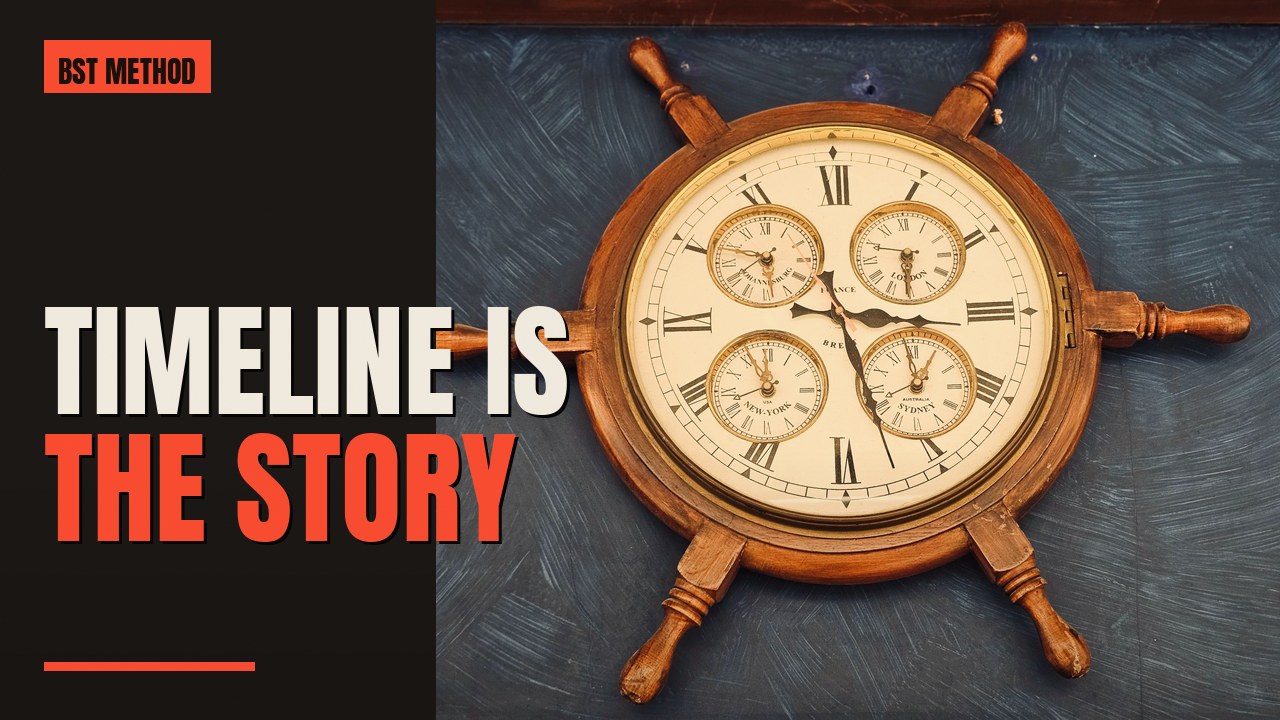
- “A beautiful vintage wall clock designed like a ship’s steering wheel, showing multiple world time zones. The warm wooden frame and classic Roman numerals give it a timeless nautical look. Captured indoors in Kurla, Mumbai.” — Bigul Malayi · cc0 1.0 — Source
- “Iced Hourglass, Dark Pocket” — April L. Sanders · by 2.0 — Source
- “Atlanta Skyline Night I” — cybrgrl · by 2.0 — Source